
Onboarding is far more than a first-day orientation; it's the critical foundation for employee success, engagement, and long-term retention. A disjointed or overwhelming process can leave new hires feeling lost and disengaged, leading to a significant drop in productivity and higher turnover. Conversely, a strong onboarding program can improve employee retention by 82% and productivity by over 70%. This article breaks down 10 proven employee onboarding best practices that transform your process from a procedural checklist into a strategic advantage.
We will move beyond generic advice to provide a comprehensive, actionable roadmap for building an exceptional onboarding experience. You'll find practical steps, real-world examples, and clear checklists for everything from pre-boarding to setting 90-day milestones. We will also explore how to create scalable and professional training content efficiently. For example, when creating onboarding videos, easy-to-use screen recording via Loom is often 50-100% longer than necessary, while professional video editing software such as Camtasia or Adobe Premier Pro requires expert video editing knowledge. We’ll discuss how Tutorial AI's tools let you generate professional video tutorials based on screen recordings. This allows a subject matter expert to speak freely without any practice and still have their video look as if it was edited in Adobe Premiere Pro, making it extremely efficient to create on-brand demos, explainer videos, feature release videos, knowledge base videos, and support article videos.
This guide is designed for teams across your organization, including L&D, sales enablement, product marketing, and IT operations, who are all critical to a new hire's success. By implementing these strategies, you can ensure your new team members feel welcomed, prepared, and empowered to contribute from day one. For a deeper dive into current trends and effective strategies, explore these additional resources on employee onboarding best practices. Now, let’s get into the specific practices that will unlock your new hires' full potential.
1. Structured Onboarding Program
A structured onboarding program is a systematic, documented process for integrating new hires, moving far beyond a simple first-day orientation. This comprehensive approach maps out an employee's journey from the moment they accept an offer through their first several months, ensuring consistency and setting them up for long-term success. This method is essential for reducing new hire anxiety, clarifying expectations, and accelerating their time-to-productivity. It stands as one of the most fundamental employee onboarding best practices because it transforms a potentially chaotic experience into a predictable and supportive one.
The core benefit is replacing haphazard, manager-dependent welcomes with a reliable, scalable system. This consistency ensures every employee receives the necessary tools, knowledge, and cultural immersion, regardless of their team or location.
How It Works
A structured program breaks the onboarding experience into distinct, manageable phases, each with its own objectives and activities. This deliberate timeline prevents information overload and builds a strong foundation for the new hire’s long-term success.
- Pre-boarding (Offer to Day 1): Focuses on administrative tasks (paperwork, IT setup) and building excitement. This phase ensures the new hire feels welcomed and prepared before their official start.
- Orientation (Week 1): Covers company mission, values, culture, and key personnel. This is where you introduce them to the broader organizational landscape.
- Role-Specific Training (First 30-90 Days): Delves into the specifics of their job, including tools, processes, and performance expectations. This is where they learn how to excel in their unique role.
- Ongoing Integration (Months 3-6): Involves regular check-ins, feedback sessions, and opportunities for professional development, cementing their place within the organization.
For example, Microsoft’s 90-day integration plan includes scheduled manager one-on-ones, introductions to key stakeholders across departments, and defined performance goals for the first three months. This approach ensures new hires are not just trained but are actively woven into the company’s operational and social fabric. A structured approach guarantees no critical steps are missed and provides a clear roadmap for both the new hire and their manager.
2. Mentorship and Buddy System
A mentorship or buddy system pairs a new employee with a more tenured colleague, creating a direct line for guidance, support, and informal knowledge transfer. This approach humanizes the onboarding experience, providing a safe, personal connection for asking questions they might hesitate to ask their manager. By offering a dedicated peer resource, you help new hires navigate unwritten social rules and complex internal processes. This system is one of the most effective employee onboarding best practices for accelerating cultural integration and building strong interpersonal networks from day one.
The core benefit is that it provides immediate psychological safety and a reliable source of practical, on-the-ground information. This personal connection significantly reduces the feeling of isolation many new hires experience, fostering a stronger sense of belonging and engagement.
How It Works
A well-designed program assigns a mentor or buddy to a new hire during their first week, with the relationship lasting for the first 3 to 6 months. The focus is less on formal job training and more on social acclimatization, cultural nuances, and day-to-day operational questions.
- Peer Buddy (First 30-60 Days): A peer buddy is typically from the same or a similar team. They help with immediate needs like navigating office logistics, understanding team-specific jargon, and finding the best coffee spot.
- Mentor (First 3-6+ Months): A mentor is often a more senior employee, sometimes outside the new hire’s direct team. This relationship focuses on broader career guidance, networking within the company, and professional development.
- Structured Check-ins: The program includes planned touchpoints, such as a first-day lunch, weekly coffee chats, and monthly goal-setting meetings, to ensure the relationship stays active and productive.
- Clear Guidance: Mentors and buddies receive training and resources, such as conversation prompts and a clear outline of their responsibilities, to ensure they can provide effective support.
For example, Salesforce assigns new hires a "Trail Guide" buddy for their first 90 days, with structured monthly check-ins to discuss everything from career goals to company culture. Similarly, many engineering teams at Meta (formerly Facebook) use a peer buddy system to help new developers understand codebases and internal tools. This deliberate pairing ensures new hires are not just learning their jobs but are also building the crucial relationships needed for long-term success.
3. Pre-Boarding and Welcome Packages
Pre-boarding engages new employees from the moment they accept an offer until their first day, transforming a period of uncertainty into one of excitement and connection. This proactive approach involves sending welcome materials, handling administrative tasks, and establishing early communication to reduce first-day anxiety and streamline logistics. It is a critical employee onboarding best practice because it ensures new hires feel valued and prepared, making their official start smoother and more effective.
The primary benefit is setting a positive tone before the employee even walks through the door. This initial engagement builds momentum, reinforces their decision to join the company, and allows them to hit the ground running on day one, rather than spending it on paperwork and basic setup.
How It Works
A successful pre-boarding strategy combines logistical efficiency with a personal touch. By completing necessary steps in advance and providing a warm welcome, you create an organized and inviting experience that demonstrates your company's culture and commitment to its people.
- Logistical Preparation: All IT equipment, system access, and accounts are configured and ready. This prevents frustrating delays and signals that the organization is prepared for their arrival.
- Administrative Completion: New hires complete necessary paperwork digitally before their start date, freeing up their first day for more meaningful activities like team introductions and training.
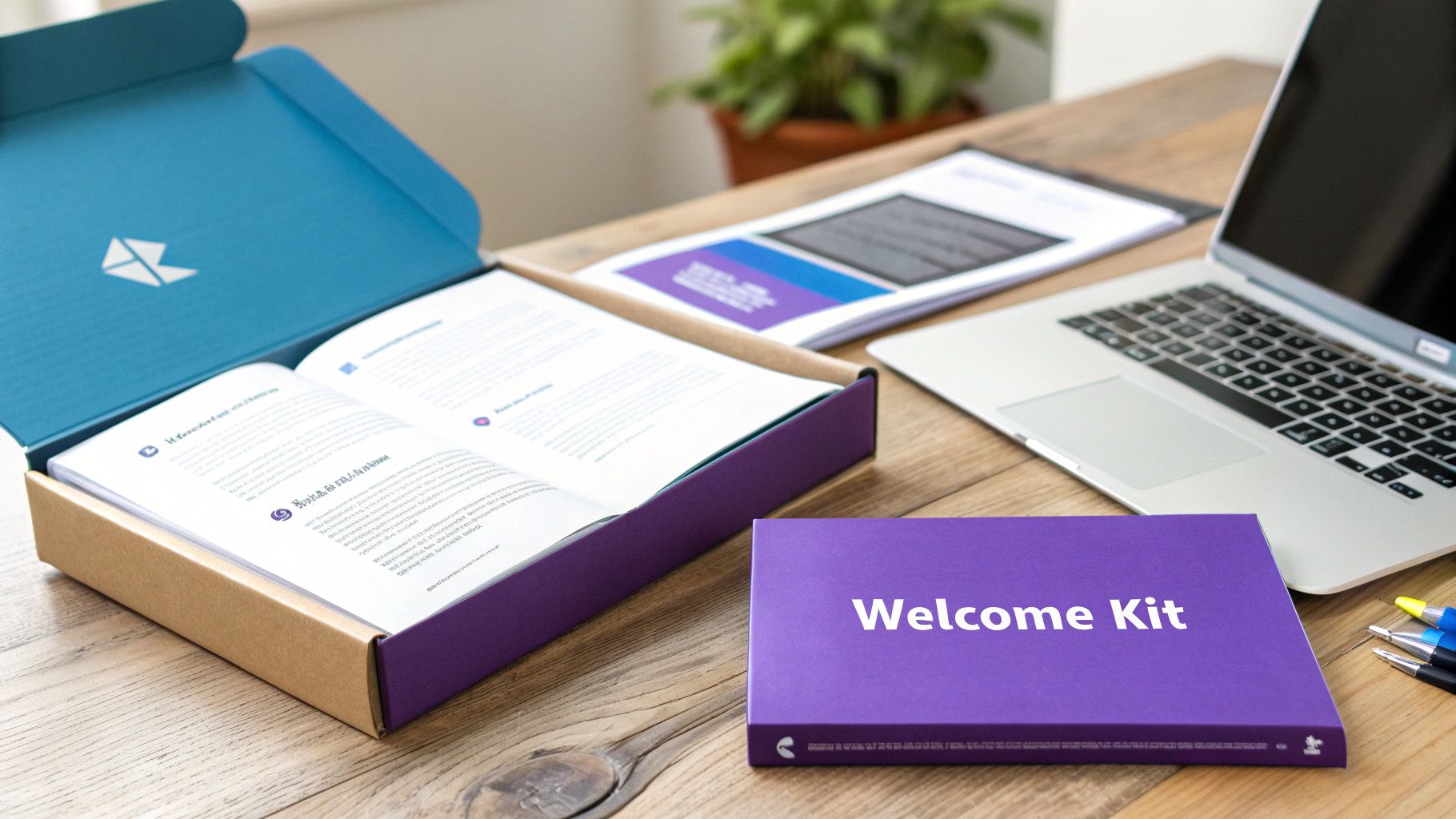
- Welcome Communication: A personalized welcome kit is sent out, often including company swag, a welcome letter from their manager, and essential information about the company's mission and values.
- Informational Resources: Share introductory materials, such as a brief video tour of the office or a welcome video from the CEO. These short, engaging videos can be easily created using a tool that simplifies screen recording for training and turns raw footage into polished, professional content without expert editing skills.
For example, HubSpot sends a welcome package that includes a copy of their Culture Code book and company merchandise, immediately immersing the new hire in their values. Similarly, Amazon’s pre-boarding system handles all IT infrastructure setup remotely. This strategic approach ensures every new team member feels like a part of the company before their tenure officially begins.
4. Clear Role Definition and Expectations
Providing a clear role definition with explicit expectations is a foundational onboarding practice that eliminates ambiguity and empowers new hires from day one. This involves documenting not just job responsibilities, but also performance metrics, success criteria, and how the role contributes to broader team and company goals. This clarity reduces anxiety and provides a direct path for the employee to start contributing effectively and confidently. It is one of the most critical employee onboarding best practices because it replaces assumptions with a documented, shared understanding of success.
The core benefit is establishing a transparent framework for performance. When a new hire knows exactly what is expected of them and how their success will be measured, they can focus their energy on meeting those standards rather than guessing what their priorities should be.
How It Works
This practice involves creating and sharing comprehensive documentation that outlines every facet of the new hire's role. This isn't just a job description; it’s a living blueprint for success that is referenced and updated throughout their initial months and beyond.
- Document Core Responsibilities: Go beyond a simple list of tasks. Detail the why behind each responsibility and how it connects to the team’s mission.
- Define Success Metrics (KPIs): Use the SMART (Specific, Measurable, Achievable, Relevant, Time-bound) framework to set clear, quantifiable goals for the first 30, 60, and 90 days.
- Outline Reporting Structures: Provide a visual organizational chart showing who they report to, who they will collaborate with, and who their key stakeholders are.
- Establish Communication Cadence: Clarify expectations for one-on-ones, team meetings, and progress updates to ensure consistent alignment.
For example, Intel provides new engineers with detailed job profiles that include specific quarterly Objectives and Key Results (OKRs), linking their individual tasks directly to departmental goals. Similarly, Accenture uses well-defined competency frameworks for each consulting level, clearly outlining the skills and behaviors required for advancement. This structured approach ensures every new employee has a precise roadmap to follow, creating a direct line of sight between their daily work and their long-term career growth.
5. Comprehensive Training and Development Programs
A comprehensive training program is a structured learning initiative designed to equip new hires with the specific skills and knowledge needed to excel in their roles. This goes beyond basic orientation to cover technical skills, system navigation, compliance requirements, and soft skills development. A key component of employee onboarding best practices, this approach ensures new hires are not just informed, but are truly capable and confident from the start. It accelerates their ramp-up time and directly impacts their ability to contribute meaningfully.
The main advantage is its targeted nature; it directly addresses the skills gap between a new hire's existing abilities and the specific demands of their new role. By combining various learning formats, it accommodates different learning styles and creates a more engaging, effective educational experience.
How It Works
A comprehensive program systematically builds competence through a blended learning approach. It breaks down complex information into digestible formats and provides opportunities for both theoretical learning and practical application, ensuring knowledge is retained and can be used on the job.
- Role-Specific Tracks: Develop customized learning paths for different roles. A sales new hire’s track would focus on product knowledge and CRM usage, while an engineer’s would prioritize coding standards and system architecture.
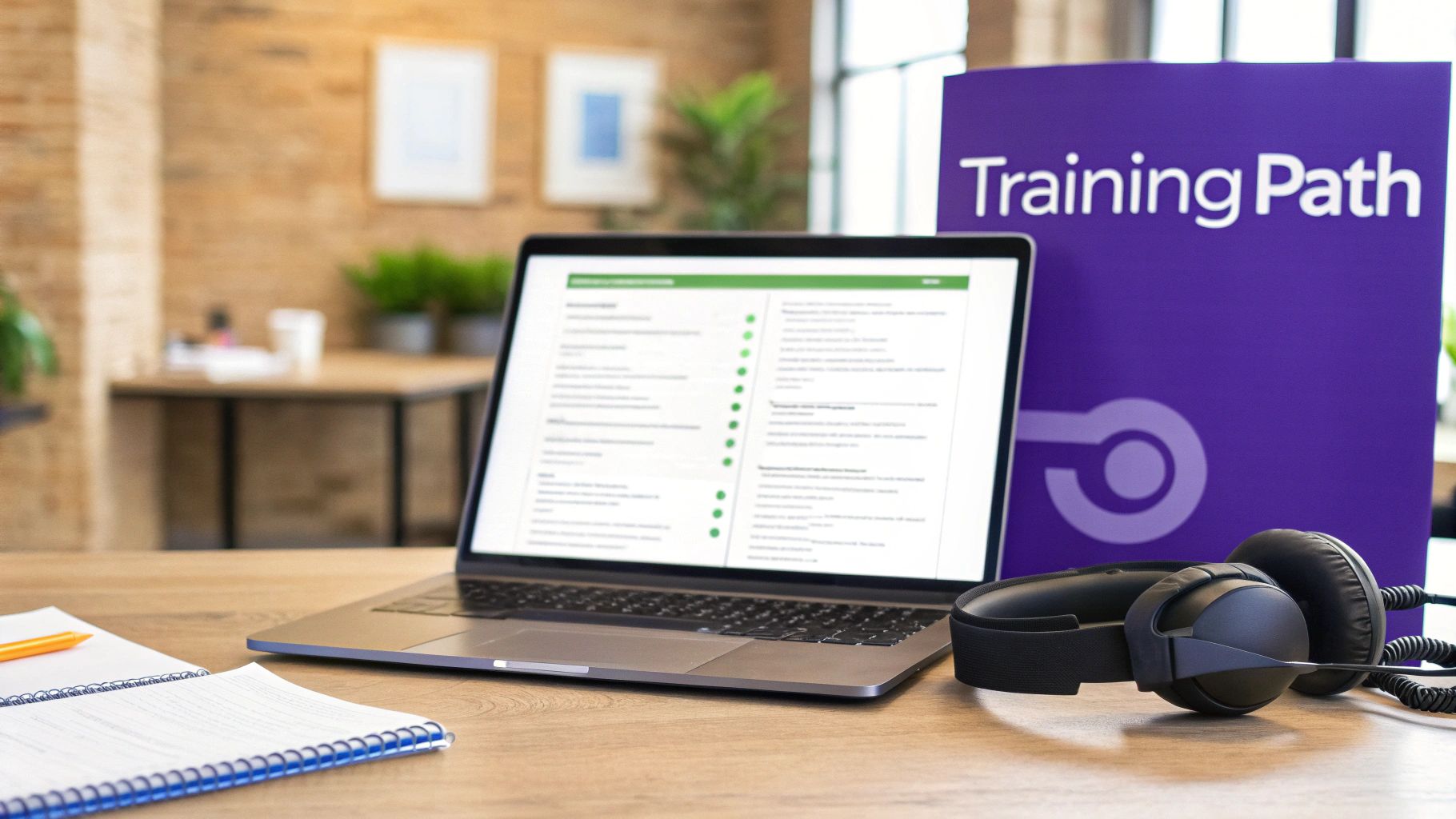
- Blended Learning Model: Combine various formats like instructor-led sessions, e-learning modules, hands-on practice, and on-the-job shadowing. This caters to diverse learning preferences and reinforces concepts through multiple mediums.
- Knowledge Assessments: Incorporate quizzes, practical assignments, and certifications to gauge comprehension and identify areas needing further support.
- Continuous Improvement: Regularly gather feedback from new hires and managers to refine training content, ensuring it remains relevant and effective.
For example, a new support agent might watch video tutorials on handling common tickets, complete an e-learning module on the company’s tone of voice, and then shadow a senior agent. This multi-faceted approach ensures they are fully prepared. For creating custom video content efficiently, tools can transform screen recordings into polished, on-brand tutorials, removing the need for expert video editing skills. Discover how to enhance your onboarding with professional-quality knowledge base videos. This structured training ensures every new hire achieves a baseline level of proficiency quickly and consistently.
6. First Week and First Month Milestones
Establishing specific milestones for a new hire’s first week and first month provides a clear, measurable path to integration. This approach moves beyond a simple task list, creating a structured journey with defined checkpoints that gauge progress, build confidence, and identify potential challenges early. This is a crucial employee onboarding best practice because it provides immediate direction and a sense of accomplishment, preventing the new hire from feeling lost or overwhelmed.
The core benefit is turning the abstract goal of "getting up to speed" into a concrete set of achievements. This clarity helps both the employee and their manager track progress effectively, ensuring the new hire is meeting foundational expectations and receiving support exactly when they need it.
How It Works
This method involves breaking down the initial learning curve into time-bound, achievable goals. These milestones should cover a mix of tasks, learning objectives, and social integration points, providing a holistic view of the new hire's progress.
- First Week Goals: Focus on foundational knowledge and immediate connections. This includes completing essential training, meeting key team members, understanding core tools, and achieving a small, tangible win.
- First 30-Day Goals: Broaden the scope to role-specific contributions and deeper understanding. This involves contributing to a team project, demonstrating proficiency in a key software, and understanding departmental workflows.
- Scheduled Check-ins: Formal meetings on days 1, 3, 7, and 30 are critical. These checkpoints are used to review milestone progress, answer questions, provide feedback, and adjust priorities.
- Celebrating Success: Acknowledging the achievement of milestones reinforces positive momentum and makes the new employee feel valued and successful from the start.
For example, Adobe assigns new hires a meaningful first-month project mentored by a senior team member, ensuring they are contributing value while learning. Similarly, LinkedIn uses formal 30-day milestone reviews to discuss achievements and set goals for the next 60 days. This practice provides a clear roadmap, enables early intervention if issues arise, and builds a strong foundation for future performance discussions.
7. Cultural Integration and Team Building
Cultural integration and team building are intentional processes designed to help new hires understand, embrace, and become part of the organization's unique social and operational fabric. This goes beyond handing them an employee handbook; it involves actively immersing them in the company’s values, traditions, and communication styles. This approach is a critical employee onboarding best practice because it fosters a sense of belonging, which directly correlates with higher engagement, better performance, and increased retention rates.
The core benefit is making new employees feel like valued members of a community, not just another cog in the machine. A deliberate focus on cultural fit and team connection ensures new hires are not only aligned with their role's responsibilities but also with the company’s mission and its people, accelerating their path to feeling truly part of the team.
How It Works
This practice involves a series of planned activities and informal interactions that bring the company culture to life. Instead of leaving cultural absorption to chance, you create specific touchpoints that demonstrate what the company values and how the team collaborates.
- Values Immersion: Move beyond listing values on a wall. Use storytelling and real-world examples to show how core values like "customer obsession" or "radical transparency" guide daily decisions and actions.
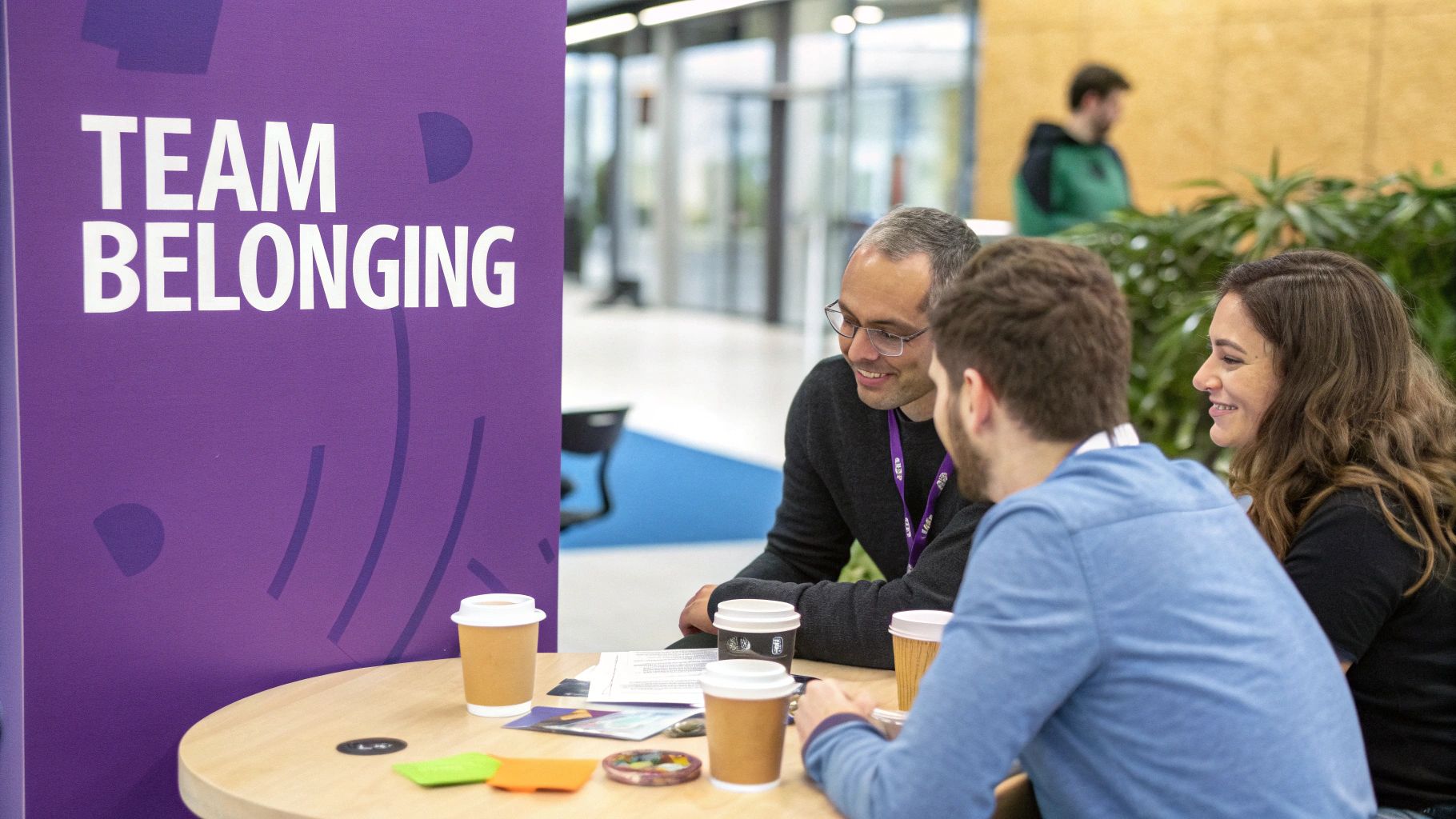
- Team Connection: Facilitate both structured and unstructured interactions. Schedule a team lunch during the first week and assign a "buddy" who can answer informal questions about office norms and unwritten rules.
- Social Rituals: Introduce new hires to recurring company events, whether it's a monthly all-hands meeting, a weekly virtual coffee chat, or an annual team-building offsite. This helps them understand the rhythm of the organization.
- Community Building: Connect new employees to company-sponsored groups or communities based on shared interests, such as a book club, a running group, or an employee resource group (ERG).
For example, Zappos famously offers new hires money to quit after their intensive four-week culture and values training, ensuring only those truly committed to their unique service-oriented culture remain. This powerful gesture solidifies the importance of cultural alignment from day one. By deliberately weaving cultural integration into the onboarding process, you build a stronger, more cohesive workforce.
8. Technology and Systems Access Setup
Ensuring new employees have immediate access to all necessary technology, software, and systems is a critical, yet often overlooked, component of effective onboarding. This practice involves a proactive, streamlined process to provision everything a new hire needs, from hardware and email accounts to specialized software, ideally before their first day. It prevents frustrating delays, empowers employees to be productive from day one, and signals a high level of organizational competence. This technical readiness is one of the most impactful employee onboarding best practices for making a positive first impression.
The core benefit is eliminating the common Day One scenario where a new hire spends hours waiting for IT support. A smooth technical setup demonstrates respect for their time and eagerness for them to contribute, directly impacting their initial engagement and reducing early-stage frustration.
How It Works
A successful technology setup process is built on proactive planning and automation. It breaks down the technical provisioning into a checklist-driven workflow that begins weeks before the employee's start date, ensuring a seamless transition from candidate to productive team member.
- Pre-Start Provisioning (2 Weeks Before Start): The IT team receives an automated notification upon offer acceptance. They use a role-based checklist to prepare hardware (laptop, monitors), create user accounts (email, SSO), and assign software licenses.
- Equipment Delivery & Setup (Week Before Start): For remote employees, all equipment is shipped to arrive several days early, complete with clear setup instructions. For in-office staff, their workspace is fully configured and tested.
- Day One Access & Orientation (First Day): The new hire logs in with temporary credentials and is guided through setting up their accounts, including security protocols like multi-factor authentication. An IT point person is available for immediate support.
- Ongoing Support & Training (First Week): The new hire receives access to documentation and introductory training for key systems. This often includes short, targeted video tutorials that they can reference as needed.
For example, a company like Shopify utilizes an automated IT workflow that triggers account creation across dozens of platforms the moment a new hire is added to their HR system. This ensures that by the time the employee opens their pre-configured laptop, their access to tools like Slack, Jira, and their primary development environment is already active. This systematic approach guarantees new hires can dive into their work, not into a pile of IT tickets.
9. Feedback and Check-In Cadence
A consistent feedback and check-in cadence is a structured schedule of conversations designed to support a new hire through their initial months. This goes beyond a single 90-day review, creating a continuous dialogue that fosters psychological safety, enables rapid course correction, and proactively addresses challenges. Establishing this rhythm is a critical employee onboarding best practice because it shows genuine investment in the new hire's success and prevents small issues from becoming significant obstacles.
The core benefit of this approach is transforming the manager-new hire relationship from one of distant oversight to active partnership. Frequent, open communication demystifies expectations and builds a strong foundation of trust, which is essential for long-term engagement and performance.
How It Works
This practice involves scheduling a mix of formal and informal check-ins to create multiple touchpoints for support and guidance. The frequency is typically higher at the beginning and gradually adjusts as the employee gains confidence and autonomy in their role.
- Initial High-Frequency Touchpoints (First Month): Schedule brief, 15-30 minute one-on-ones weekly. These early meetings focus on support, answering questions, and clarifying role expectations rather than performance evaluation.
- Structured Milestone Reviews (30-60-90 Days): Conduct more formal feedback sessions at key milestones. These conversations review progress against initial goals, discuss wins and learning opportunities, and set objectives for the next phase.
- Ongoing Dialogue (Post-90 Days): Transition to a standard check-in frequency, such as bi-weekly or monthly, ensuring the supportive communication continues beyond the formal onboarding period. To gather actionable insights throughout the onboarding process, consider incorporating crucial onboarding survey questions into these check-ins.
For example, Salesforce implements structured feedback sessions at the 30, 60, and 90-day marks, providing clear benchmarks for progress. Similarly, LinkedIn encourages frequent, less formal check-ins during the first 90 days to ensure new hires feel connected and supported. This cadence ensures feedback is timely, relevant, and helps new employees navigate their role with confidence.
10. Continuous Improvement and Feedback Loop
A continuous improvement and feedback loop is a systematic process for collecting, analyzing, and acting on feedback from new hires, managers, and onboarding coordinators. This data-driven approach treats your onboarding program not as a static project but as an evolving system that adapts to the changing needs of your organization and employees. It moves beyond a "set it and forget it" mentality to ensure the program remains effective, relevant, and impactful over time. This is a critical employee onboarding best practice because it guarantees your investment in new talent continues to yield maximum returns.
The core benefit is transforming onboarding from an administrative function into a strategic, agile process. By regularly listening to feedback, you can pinpoint friction points, identify successes, and make targeted enhancements that directly improve new hire retention, engagement, and performance.
How It Works
This practice involves creating formal channels to gather insights at key milestones and establishing a regular cadence for reviewing the data and implementing changes. The process is cyclical, ensuring the program is always being refined based on real-world experience.
- Data Collection: Systematically survey new hires at crucial intervals, such as 30, 90, and 180 days. Ask specific, actionable questions covering everything from pre-boarding communication to role-specific training and manager support. Include a mix of quantitative ratings and qualitative open-ended questions.
- Analysis and Review: Consolidate feedback into a central dashboard to track trends over time. Schedule quarterly meetings with key stakeholders (HR, department heads, trainers) to review the data, discuss common themes, and identify priority areas for improvement.
- Prioritization and Action: Evaluate potential improvements based on their expected impact and the effort required to implement them. Create a clear action plan with defined owners and timelines for each enhancement.
- Communication: Close the loop by communicating the changes you’ve made back to the organization. This shows employees that their feedback is valued and demonstrates a commitment to creating a better experience for future hires.
For example, Google famously uses employee surveys and data analytics to continuously iterate its onboarding process. This led to a simple but effective change: managers receive a "just-in-time" email the day before a new hire starts, reminding them of key onboarding tasks, which resulted in a 25% improvement in time-to-productivity. This proves that small, data-informed adjustments can produce significant results.
10-Point Employee Onboarding Best Practices Comparison
From First Day to Full Potential: Building Your Onboarding Flywheel
Transitioning from a candidate to a fully integrated, high-performing team member is a critical journey. A haphazard approach to this period risks disengagement, confusion, and early turnover. As we've explored, implementing robust employee onboarding best practices is not about a one-time welcome event; it's about architecting a strategic system that transforms potential into performance.
By moving beyond a simple checklist, you create an "onboarding flywheel" - a self-reinforcing cycle where a positive initial experience fuels engagement, which in turn drives productivity and loyalty. This flywheel effect doesn't just benefit the new hire; it strengthens team cohesion, reduces the strain on managers, and ultimately impacts your bottom line. The principles we've covered, from structured pre-boarding to a continuous feedback loop, are the foundational components of this powerful engine.
Weaving the Threads: Key Takeaways for Impact
Recapping the essential strategies, a successful onboarding program is a tapestry woven from several key threads. It begins before day one with thoughtful pre-boarding and a warm welcome package, setting a positive tone and alleviating first-day jitters. Upon arrival, a structured program combined with clear role definition and a buddy system provides the scaffolding a new employee needs to navigate their new environment with confidence.
These foundational elements must be supported by practical enablement. This includes providing comprehensive training, ensuring seamless technology access, and establishing clear first-week and first-month milestones. Most importantly, the entire process is held together by a consistent feedback and check-in cadence and a commitment to continuous improvement, ensuring your program evolves and remains effective.
Putting Best Practices into Action: Your Next Steps
Reading about these best practices is one thing; implementing them is another. The key is to avoid overwhelm and start with targeted, high-impact changes.
- Audit Your Current Process: Where are the biggest gaps? Are new hires waiting days for system access? Do they meet their team members in a structured way? Identify one or two critical pain points to address first.
- Empower Your Experts: Your best trainers are your subject matter experts (SMEs), but they are often short on time. Equip them with tools that minimize friction in content creation. This is where modern solutions become a game-changer.
- For instance, leveraging a tool that uses AI can allow your product expert or team lead to record a software walkthrough naturally, without a script. The AI can then automatically edit the recording, add professional branding, generate a voiceover, and create a polished, on-brand tutorial in minutes. This transforms a time-consuming task into an efficient workflow, allowing you to build out a rich library of role-specific training videos.
- Measure and Iterate: Define what success looks like. Track metrics like time-to-productivity, 90-day retention rates, and new hire satisfaction scores. Use this data to refine your process, ensuring your onboarding program is not a static document but a living, evolving strategy.
Ultimately, investing in a world-class onboarding experience is one of the most significant investments you can make in your people and your organization's future. It communicates that you value your employees from the moment they accept the offer and sets the stage for a long, productive, and mutually beneficial relationship. You are not just filling a role; you are integrating a vital new piece into your company's culture and future success.
Ready to eliminate the friction in creating onboarding video content? Tutorial AI empowers your subject matter experts to produce polished, studio-quality software tutorials and training videos in minutes, not days. See how you can build a comprehensive library of onboarding materials at scale by visiting Tutorial AI and transform your approach to employee training.



